Horizontal Recycling of PV Cover Glass Successfully Demonstrated
NSG Group is pleased to announce the successful completion of a demonstration experiment manufacturing float glass from cover glass recovered from end-of-life photovoltaic (PV) modules.
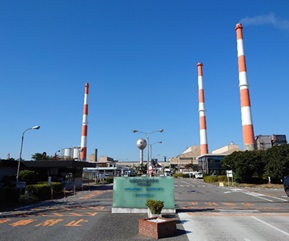
NSG Group's Chiba Plant
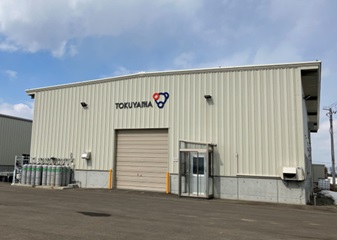
Tokuyama Corporation's "PV Panels Recycling Demonstration Facility"
More than a decade has passed since the large-scale introduction of photovoltaic power generation systems in Japan. As these systems approach the end of their service life, the volume of decommissioned panels is expected to rise sharply after 2030. Establishing technologies that enable proper material separation and closed‑loop recycling has therefore become an increasingly important social priority.
However, PV cover glass has traditionally been difficult to recycle due to its composition, which is designed to enhance module performance, and the strong adhesives used to ensure long-term durability.
For this demonstration, the cover glass was separated and extracted using Tokuyama Corporation's Low-Temperature Thermal Decomposition Recycling Technology for Photovoltaic Panels at its demonstration facility in Nanporo Town, Hokkaido.
In February of this year, NSG Group conducted a manufacturing trial at the float furnace of its Chiba Plant in Ichihara City, Chiba Prefecture, using the recovered cover glass as part of the raw material mix. The trial assessed product quality and the impact on the manufacturing process. Results confirmed that the recycled material can be utilized under defined conditions, demonstrating the feasibility of horizontal recycling into float glass.
Tokuyama, the supplier of the PV cover glass used in the experiment, possesses one of Japan's leading technologies for efficiently separating and extracting cover glass from photovoltaic panels at the end of their life cycle. To produce even higher-quality float glass, NSG Group partnered with Tokuyama and utilized this technology.
The practical application of this technology and recycling process promotes the effective use of discarded cover glass, contributing to a circular economy. Additionally, we expect reductions in the mining of natural resources, such as silica sand and soda ash; improved combustion efficiency in melting furnaces through increased cullet use; and overall reductions in CO₂ emissions in float glass manufacturing.
These efforts support the "Vision 2025 for Achieving Carbon Neutrality in the Glass Industry by 2050*2, " announced by the Flat Glass Manufacturers Association of Japan last December, which aims to build a waste glass recycling system. NSG Group will continue strengthening collaboration with partner companies as we work toward decarbonizing the entire glass industry and realizing a circular economy.
About NSG Group (Nippon Sheet Glass Co., Ltd., and its group companies)
NSG Group is the world's leading supplier of glass and glazing systems in the business areas of Architectural, Automotive, and Creative Technology.
Architectural manufactures and supplies architectural glass as well as glass for the solar energy and other sectors.
Automotive serves the original equipment (OE) and aftermarket replacement (AGR) glazing markets.
Creative Technology comprises several discrete businesses, including lenses for printers and scanners, specialty glass fibers and glass flakes, mainly glass cord, which is a reinforcing material for timing belts, and Fine Glass products.
https://www.nsg.com
About Tokuyama Corporation
Tokuyama was founded in 1918 in Tokuyama Town, Yamaguchi Prefecture (now Shunan City), with the aim of achieving domestic production of soda ash, which at the time was reliant on imports. In addition to traditional basic materials such as chemicals and cement, the company now focuses on advanced electronic materials, such as polycrystalline silicon for semiconductors, as well as the life sciences sector, including materials for photochromic eyeglass lenses and dental equipment. Furthermore, the company has established recycling technologies for waste gypsum board and used photovoltaic panels, and is actively expanding its business into the environmental sector.
https://www.tokuyama.co.jp/eng/
*1: "Low-Temperature Thermal Decomposition Recycling Technology"
This technology completely pyrolyzes the resin that strongly binds the components of photovoltaic panels using a chemical method involving catalyst support on ceramic filters, enabling the high-precision extraction of glass, cells, and interconnectors. This technology was developed in collaboration with the New Energy and Industrial Technology Development Organization (NEDO). To commercialize operations at the demonstration facility in Nanporo Town, Sorachi District, Hokkaido, the corporate partnership organization "Hokkaido Consortium" was established in July 2024, with the aim of building a recycling network within Hokkaido.
https://www.tokuyama.co.jp/research/recent_study/pvr.html (Japanese Only)
MEDIA CONTACT: