Horizontal Recycling of Float Glass Using Waste Glass Collected from the Market Successfully Demonstrated
NSG Group is pleased to announce the successful completion of a demonstration project to manufacture float glass using waste glass recovered from renovation projects. The project was conducted in collaboration with the Flat Glass Manufacturers Association of Japan ("FGMAJ").
As part of this initiative, waste glass removed from a building owned by The University of Tokyo was collected jointly with the Association. The recovered glass consisted of 12 mm-thick ceramic-printed tempered glass with safety film. The project aimed to achieve horizontal recycling, whereby end-of-life glass is recycled back into new float glass products.
The recovered waste glass was sorted by an intermediate processing company, and glass from which the safety film had been removed was fed into the float furnace of its Chiba Plant in Ichihara City, Chiba Prefecture, in late August 2026. Manufacturing trials were conducted, along with evaluations of product quality and operational impacts on the production process. The results confirmed that, under certain conditions, the recovered material could be used successfully as a recycled raw material without adverse effects. This demonstration verified the feasibility of producing float glass in Japan using post-consumer glass collected from the market.
In addition, glass that could not be recycled into float glass due to the presence of safety film was diverted to an alternative recycling route, where it was processed and utilized as a raw material for glass wool production through an intermediate recycling company.
In glass manufacturing, glass cullet ("pre-consumer cullet") generated during production and recovered before reaching the market has long been recycled almost entirely back into the glass manufacturing process.
However, the use of waste glass ("post-consumer cullet") generated from building demolition or end-of-life vehicles as a raw material presents significant technical challenges. Contamination by foreign materials such as metals can lead to production losses, and even trace impurities can have a substantial impact on product quality and furnace operations, particularly in float glass manufacturing, which accounts for most of the architectural and automotive glass production. As a result, most post-consumer cullet collected from the market has traditionally been treated as industrial waste.
In recent years, growing societal demands for carbon neutrality and a circular economy have highlighted the limitations of efforts undertaken by individual companies alone to increase post-consumer cullet utilization.
In December 2025, FGMAJ established the "Flat Glass Recycling Vision - First Vision 2025". Under this initiative, FGMAJ and its member companies, AGC Inc., Central Glass Co., Ltd., and NSG Group, committed to expanding the recycling of domestic post-consumer cullet across the industry.
The vision aims to establish systems and infrastructure for collecting waste glass from buildings and end-of-life vehicles and reusing it as raw material for architectural glass products. In addition to validating and promoting the use of recycled glass in manufacturing processes, member companies are also pursuing technological developments that facilitate the separation and recovery of glass from other materials.
Although annual recycling volumes of post-consumer cullet in Japan currently remain limited, the industry has set targets of 110,000 tons per year by FY2030 and 300,000 tons per year by FY2050.
The commercialization of this technology and recycling process will promote the effective utilization of glass that has historically been discarded, contributing to the realization of a circular economy.
Furthermore, increased cullet utilization is expected to reduce the consumption of natural resources such as silica sand and soda ash while improving the energy efficiency of glass melting furnaces. These benefits can contribute to lowering CO2 emissions from float glass manufacturing and support the industry's transition toward carbon neutrality.
NSG Group will continue working closely with FGMAJ and industry partners to advance decarbonization initiatives and promote the development of a circular economy across the glass industry.
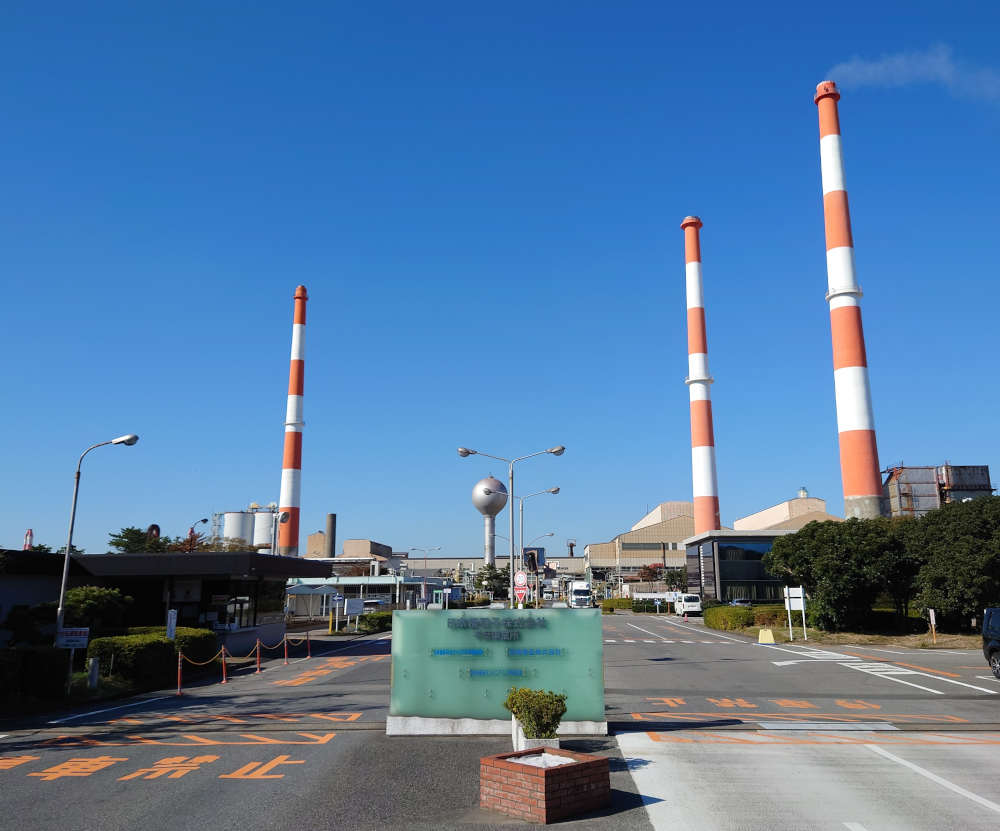
NSG Group's Chiba Plant
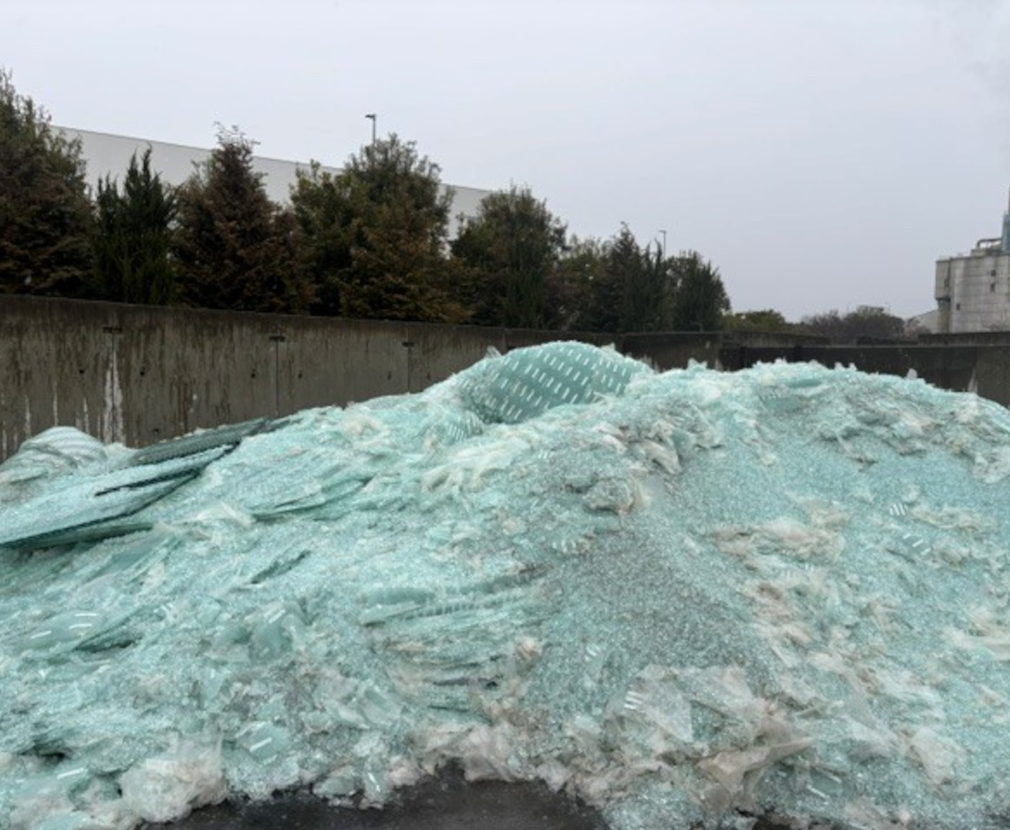
Post-consumer Glass Cullet Collected from Demolition and Renovation Projects
Comment from Professor Tsuyoshi Seike,
Chair, Flat Glass Recycling and Resource Recovery Subcommittee, Flat Glass Association of Japan
Professor, Graduate School of Frontier Sciences, The University of Tokyo
Until recently, flat glass manufacturers generally regarded waste glass generated during building demolition as unsuitable for recycling because of the high likelihood of contamination by foreign materials. Consequently, proactive consideration of recycling such glass had been limited. However, in response to the need to pursue every available measure to achieve carbon neutrality, the industry has changed its approach. On December 12, 2025, the Flat Glass Manufacturers Association of Japan announced its commitment to collecting and recycling a wider range of waste glass, including glass recovered from demolition sites.
In this project, The University of Tokyo provided glass that had originally been scheduled for disposal as industrial waste, and a recycling demonstration was conducted under the leadership of the Association. Although the glass contained safety film and therefore presented a significant challenge for recycling into glass cullet, the film was successfully removed through processing and manual operations, enabling a portion of the material to be utilized in the float furnace at NSG Group's Chiba plant.
Glass collected from the market comes in many different specifications, each presenting challenges in sorting, collection, and quality control. I hope that the industry will continue addressing these issues one by one and steadily advance the development of glass recycling.
About NSG Group (Nippon Sheet Glass Co., Ltd., and its group companies)
NSG Group is the world's leading supplier of glass and glazing systems in the business areas of Architectural, Automotive, and Creative Technology.
Architectural manufactures and supplies architectural glass as well as glass for the solar energy and other sectors.
Automotive serves the original equipment (OE) and aftermarket replacement (AGR) glazing markets.
Creative Technology comprises several discrete businesses, including lenses for printers and scanners, specialty glass fibers and glass flakes, mainly glass cord, which is a reinforcing material for timing belts, and Fine Glass products.https://www.nsg.com
*1: About the Flat Glass Manufacturers Association of Japan
The Flat Glass Manufacturers Association of Japan was established on September 1, 1947, with the objective of promoting the sound development of Japan's flat glass industry and contributing to the realization of a sustainable society. It was founded as an industry organization representing domestic flat glass manufacturers.
Subsequently, on April 1, 2023, the association was reorganized as the Flat Glass Manufacturers Association of Japan (General Incorporated Association). The association is currently composed of three member companies: AGC Inc., Nippon Sheet Glass Co., Ltd., and Central Glass Co., Ltd.,https://www.itakyo.or.jp
*2: About the Flat Glass Manufacturers Association of Japan's "Flat Glass Recycling Vision: First Vision 2025"
(Japanese Only)
Press Release:https://www.itakyo.or.jp/upload/press-release_20251212-1.pdf
Explanatory Material 1:https://www.itakyo.or.jp/upload/press-release_20251212-2.pdf
Explanatory Material 2:https://www.itakyo.or.jp/upload/press-release_20251212-3.pdf
MEDIA CONTACT: